On linocut, linoleum flooring, and the fragile symbols we ask to carry our economic and political hopes.
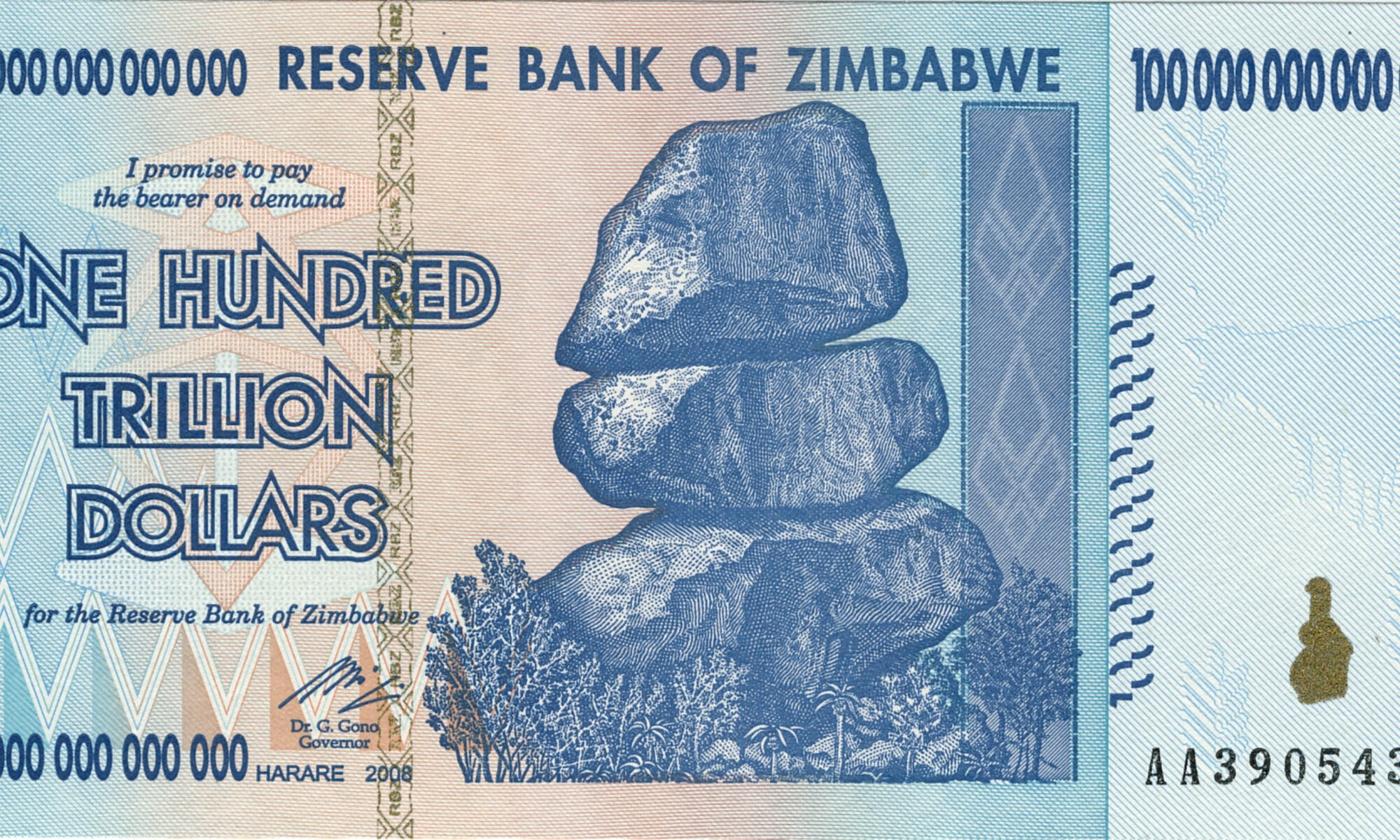
Zimbabwe’s 100 trillion-dollar banknote has become a global shorthand for economic collapse. At its centre sits a strangely serene image: three balancing rocks stacked against the sky, a monument to stability printed on money that became almost instantly worthless. It’s this tension — between national symbol and failure — that underpins the work of artist Dan Halter.
Who is Dan Halter?
Dan Halter (born 1977 in Harare, Zimbabwe) is a contemporary artist based in Cape Town, South Africa. His work explores dislocated national identity, human migration, and the politics of post-colonial Zimbabwe, often with a streak of dark humour.
Graduating from the University of Cape Town in 2001 with a BA(FA), Halter has developed a practice built around ubiquitous, everyday materials: woven plastic bags from China, railway map fragments, and mass-produced objects associated with mobility, labour, and trade. He frequently draws on the language of craft and curio — especially weaving and other collaborative fabrication techniques — and situates these within a conceptual fine art context.
Halter has held numerous solo exhibitions worldwide, including Cross the River in a Crowd (2019) and Money Loves Money (2021). His work has been shown in significant group exhibitions at institutions such as the Smithsonian National Museum of African Art, the 10th Havana Biennale (2009), and the Dakar Biennale (2010). He has completed residencies in Zürich, Rio de Janeiro, Cologne, Turin, and Dufftown, Scotland. His work is included in collections such as the Jean Pigozzi Collection, the Rennie Collection (Vancouver), and the South African National Gallery.
Across these contexts, Halter returns repeatedly to the history of oppression, economic relationships across the African continent, and the experience of displacement. His art often uses familiar objects as vehicles for reflecting on identity, value, and belonging.
Domboremari: The Money Rocks
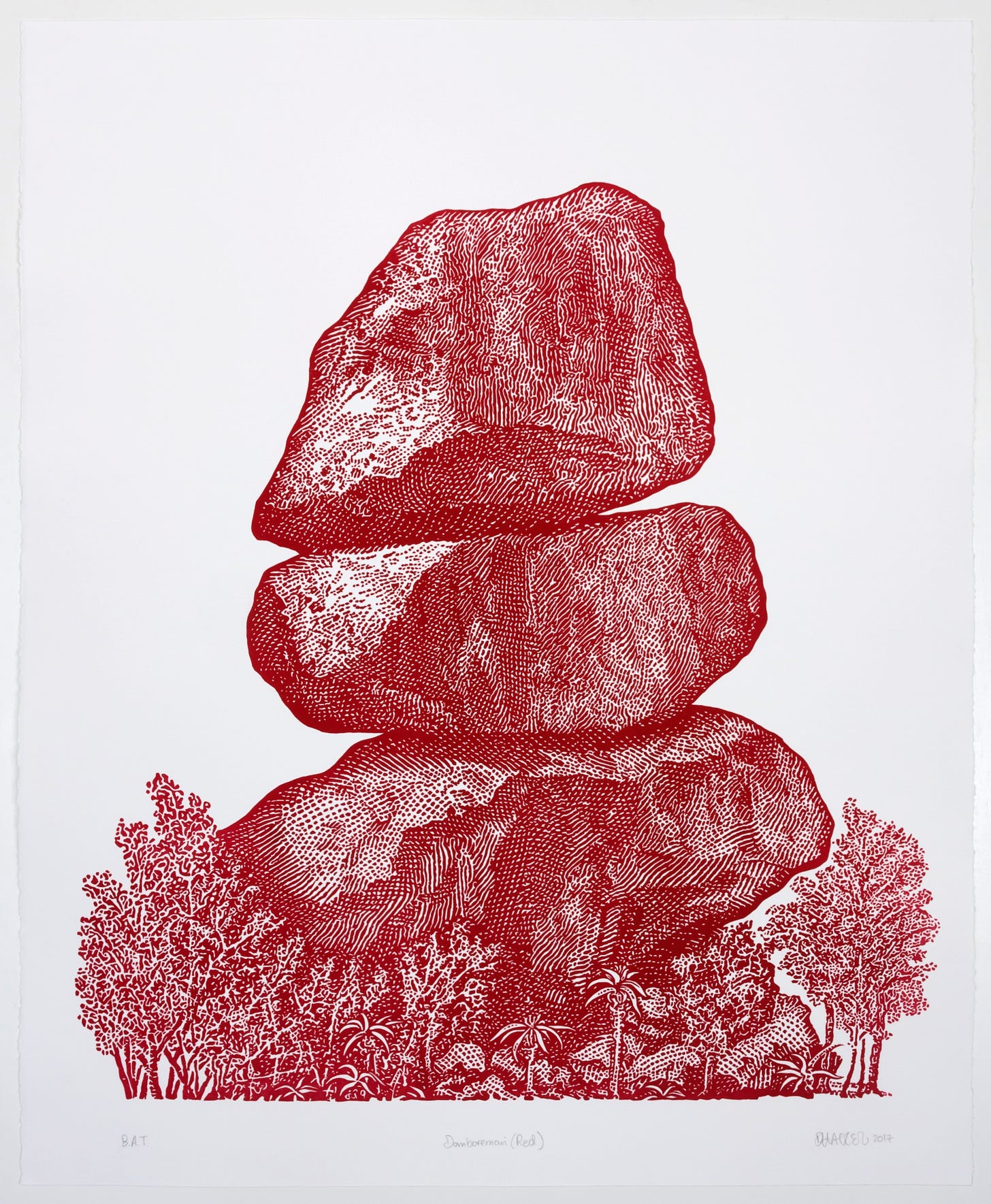
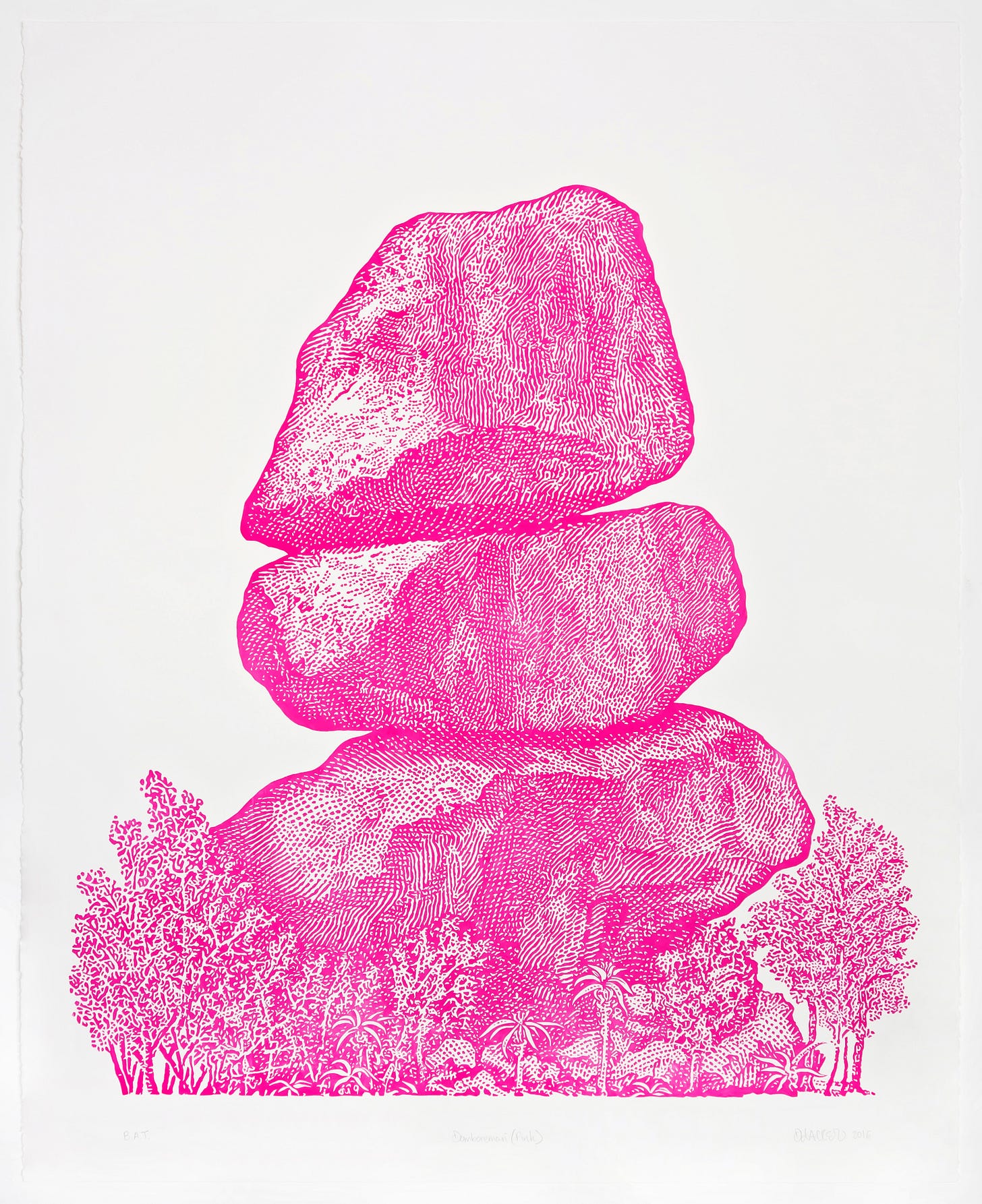
At Warren Editions under the guidance of Zhané Warren, Halter developed a major printmaking project titled Domboremari — Shona for “the money rocks.” The series centres on the Chiremba Balancing Rocks, the formation that appears on Zimbabwean banknotes and has become an emblem of the country’s hyperinflation crisis.
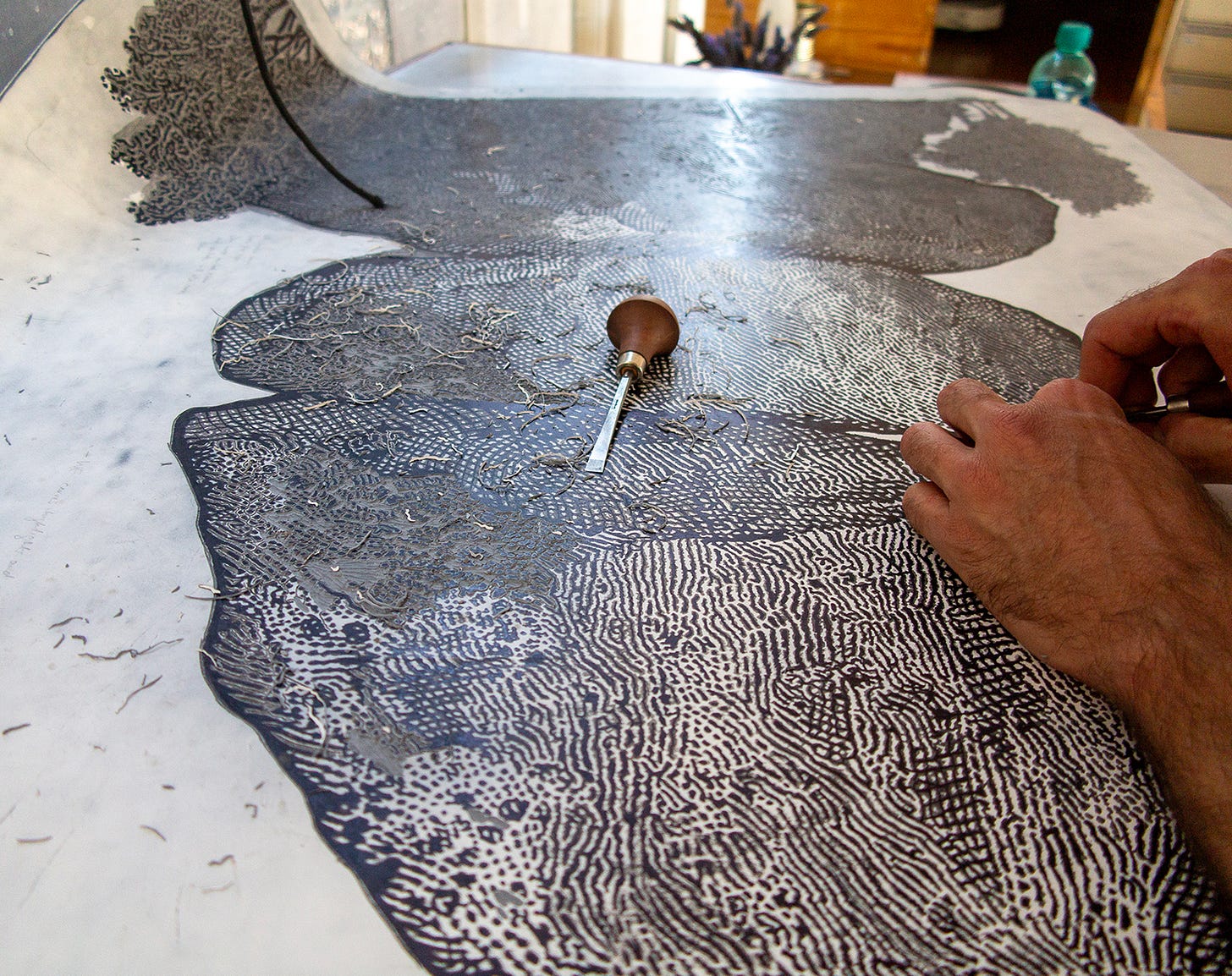
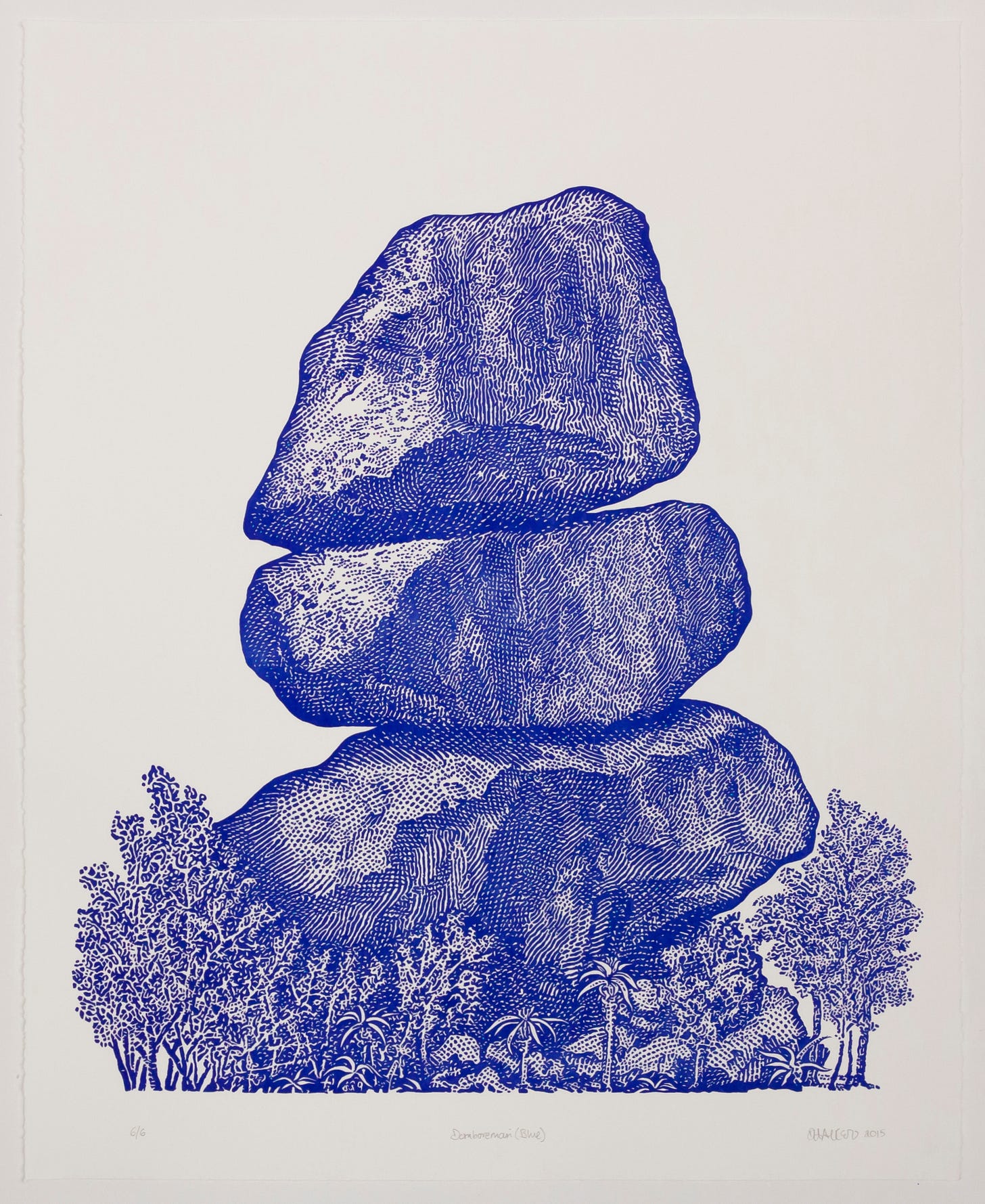
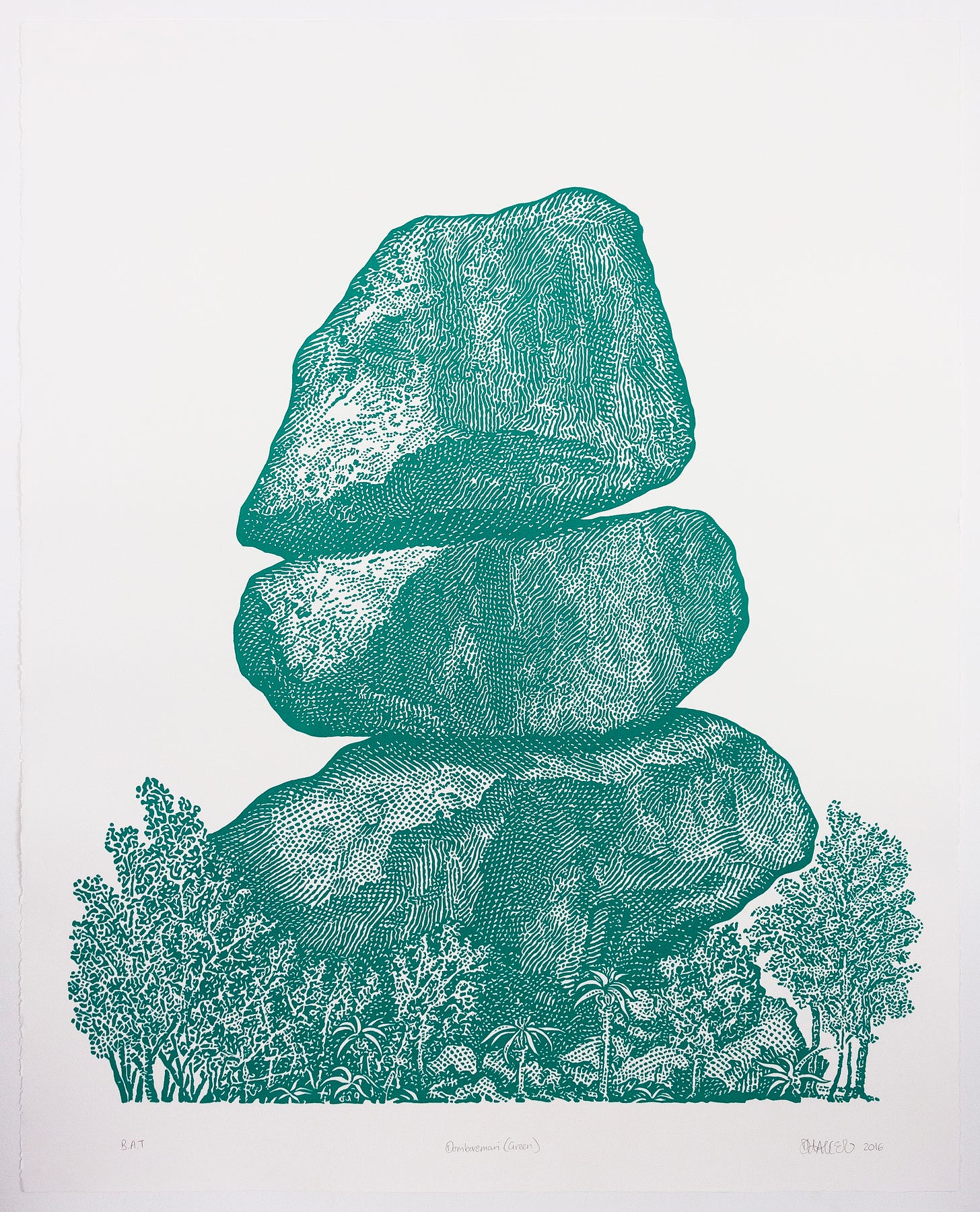
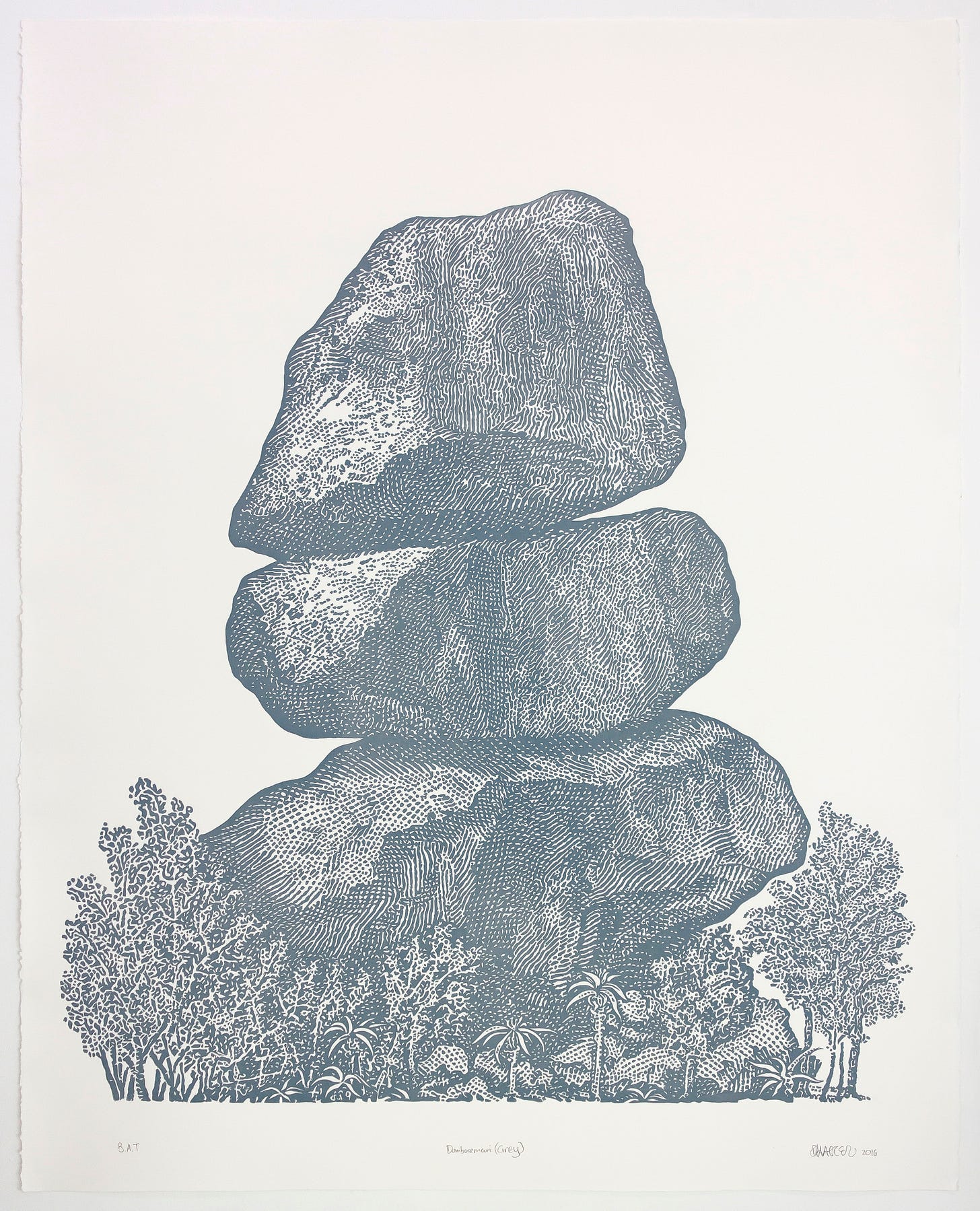
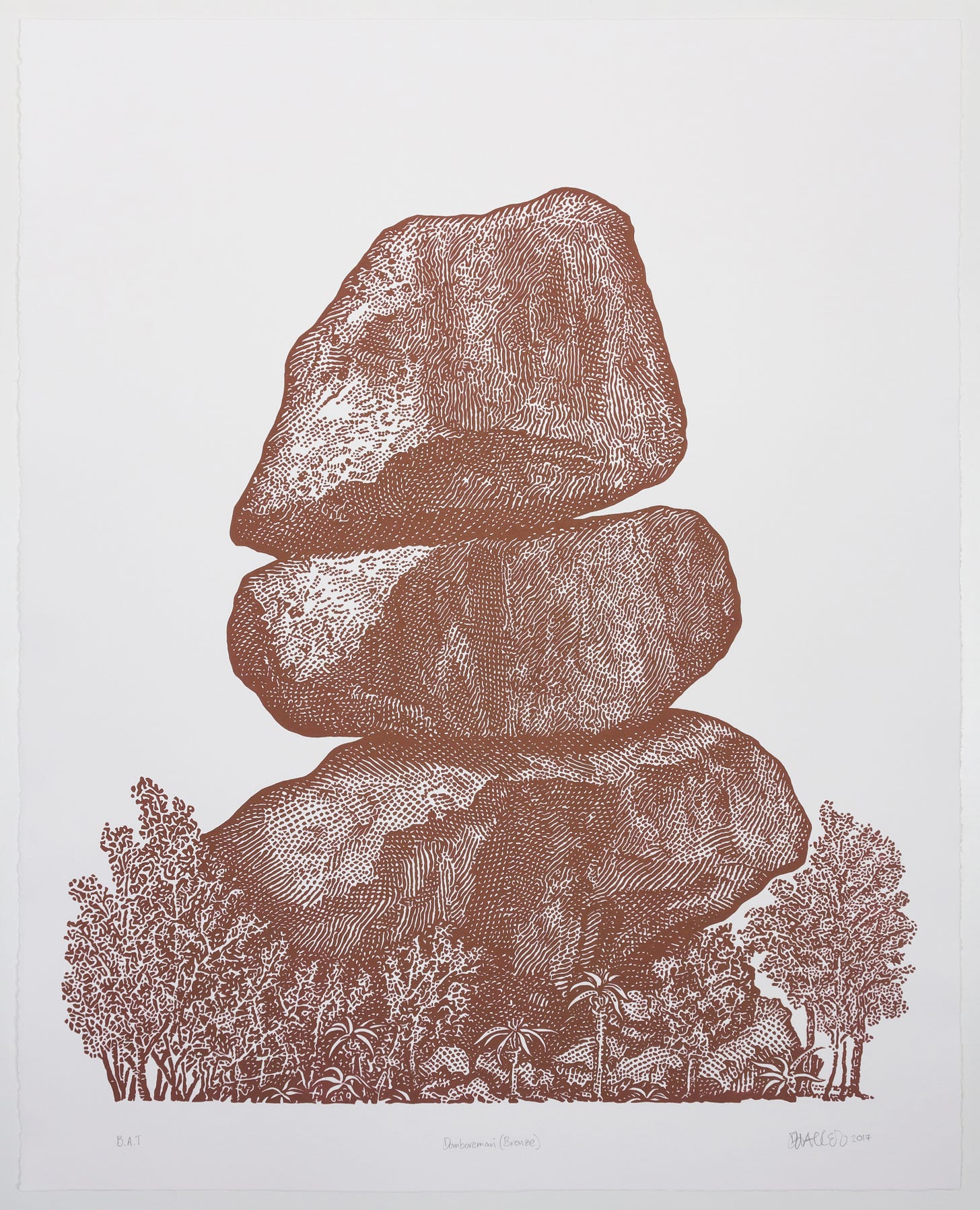
For this project, Halter spent over a month meticulously carving the image of the balancing rocks into linoleum flooring. The resulting large-scale linocut was then printed in six editions, each in a different colour: red, bronze, grey, green, pink, and blue. These colours reference the range of hues used on Zimbabwean banknotes during hyperinflation, when denominations escalated to the point that notes were printed as high as 100 trillion-dollars.
By the time Zimbabwe abandoned its currency in 2009, these notes were essentially worthless — souvenirs of economic collapse. Yet they also circulated widely as images: tucked into drawers, traded as curios, and photographed as symbols of a system in free fall. For Halter, the banknote and its central motif, the Chiremba Balancing Rocks, function as a powerful and ironic emblem of a nation in crisis.
Linoleum, Labour, and Loss of Value
Linocut is a relief printmaking process in which the artist carves away the negative space, leaving the image in raised relief to be inked and printed. In Domboremari, this slow act of cutting is more than just a technique; it becomes a metaphor.
Zimbabwe’s banknotes were mass-produced, utilitarian objects — designed to circulate quickly, handled without ceremony, and replaced as inflation rendered them obsolete. By contrast, Halter transforms this image into a singular, labour-intensive artwork. Every gouge in the linoleum marks time and effort, in stark opposition to the rapid erosion of value that those same banknotes came to represent.
The material itself is significant. Linoleum flooring is the everyday substance from which linocut takes its name, a surface more associated with kitchens and corridors than with fine art. By carving the national symbol of Zimbabwe’s economy directly into this humble material, Halter creates a direct, conceptual link between medium and subject.
In this context, the carving away of linoleum reads as a parallel to the stripping away of economic stability in Zimbabwe: what remains in raised relief is a fragile symbol of endurance, surrounded by the absence of what has been lost.
Identity, Displacement, and Dark Humour
For Halter — a Zimbabwean living in South Africa — Domboremari is also an exploration of dislocated national identity. The balancing rocks, once a proud motif of statehood and natural heritage, have been recast as an international shorthand for failure. To live with that image, to have grown up with it on one’s money, and to see it later circulate as a joke about inflation, is to experience identity as something at once deeply personal and subject to global ridicule.
Domboremari holds this contradiction. The prints are visually striking: bold, graphic forms of rock stacked improbably against open space, rendered in colours that echo the banknotes yet elevate them beyond their original function. There is a dark humour in dedicating weeks of painstaking labour to a symbol pulled from a currency that could no longer buy bread.
At the same time, the work asks what endures when value disappears. The rocks still stand. The image persists. The labour of carving and printing becomes a way of reclaiming and re-seeing a national symbol that has been flattened into an internet meme of economic absurdity.
A Symbol Reconsidered
Through Domboremari, Halter and Warren Editions transform a familiar image of Zimbabwe’s collapse into a richly layered object of contemplation. The project sits at the intersection of:
• Material and meaning: linoleum flooring as both everyday surface and fine art matrix.
• Image and economy: the Chiremba Balancing Rocks as a state-sanctioned symbol turned global shorthand for hyperinflation.
• Labour and loss: the slow carving of linocut against the rapid disappearance of monetary value.
In giving this image a new form, scale, and context, Domboremari invites us to look again at the politics embedded in ordinary objects — and at how national identity is carried, and sometimes distorted, by the things we handle every day.