
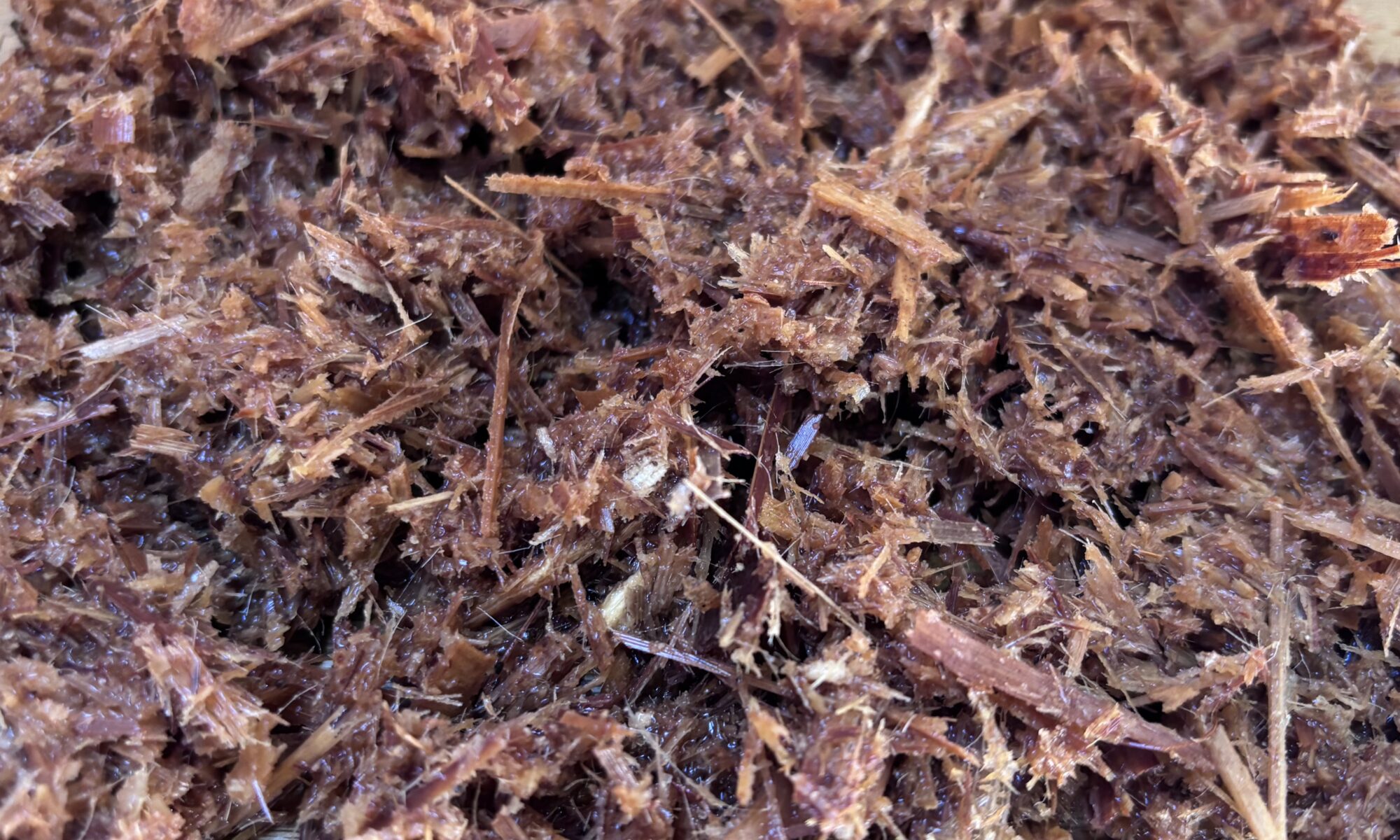
Fines are tiny pieces of plant fibre suspended in pulp during papermaking. Technically described as cellulosic microparticles. They are much smaller than the long fibres we usually imagine, but they play a major role. Depending on how the pulp is prepared and treated, fines can make up from about 1% to as much as 40% of the total pulp. The fines used for machine-made paper are much smaller than those used in hand papermaking.
By filling the spaces between longer fibres, fines influence paper density, air permeability, and surface smoothness. The fines are especially valuable because they increase strength, smoothness, and opacity.
Where fines come from
Fines form when larger plant fibres are broken down during papermaking and can be divided into two main groups:
- Primary fines. These are already present in the pulp before strong mechanical treatment. They originate from naturally small cells in the plant, such as ray parenchyma cells, whose walls contain cellulose. Because these cells are small, they enter the pulp as very fine particles.
- Secondary fines. These are created later during mechanical and chemical treatment, such as shredding, cooking and hand beating. With Typha capensis, the fibres are shredded and cut, then cooked and beaten by hand. These actions scrape and peel thin layers and fibrils from the walls of larger fibres, producing secondary fines.
Compared with long fibres, fines have a much larger surface area relative to their size and typically carry a strong surface charge. This helps them attach to, or flocculate with, the longer fibres rather than remain separate.
How fines affect the paper
Fines strongly affect both sheet formation and the properties of the finished paper.
- Strength and bonding. Fines help fibres bond more closely. Their large surface area allows many hydrogen bonds with surrounding fibres, increasing tensile strength (the amount of pulling force the sheet can withstand), density, and often smoothness.
- Opacity and appearance. The small size and large surface area of fines scatter light and increase opacity, making the sheet less transparent. This is useful for drawing, printing, and painting, where a more solid-looking sheet is preferred.
- Water drainage. Fines also slow water drainage on the mould. They swell and occupy the small gaps between fibres, restricting water flow and slowing drainage and couching.
This slower drainage can be advantageous. With more time to form the sheet on the mould and deckle, and to couch it from the mould, the papermaker has more time to gently shake the mould and deckle, helping fibres and fines spread more evenly and interlock. The resulting sheet is often more uniform and stronger.
In summary, fines can be part of the process of making paper from Typha capensis if one desires a dense, opaque sheet. They slow down formation but give the papermaker greater control over the paper’s internal structure.
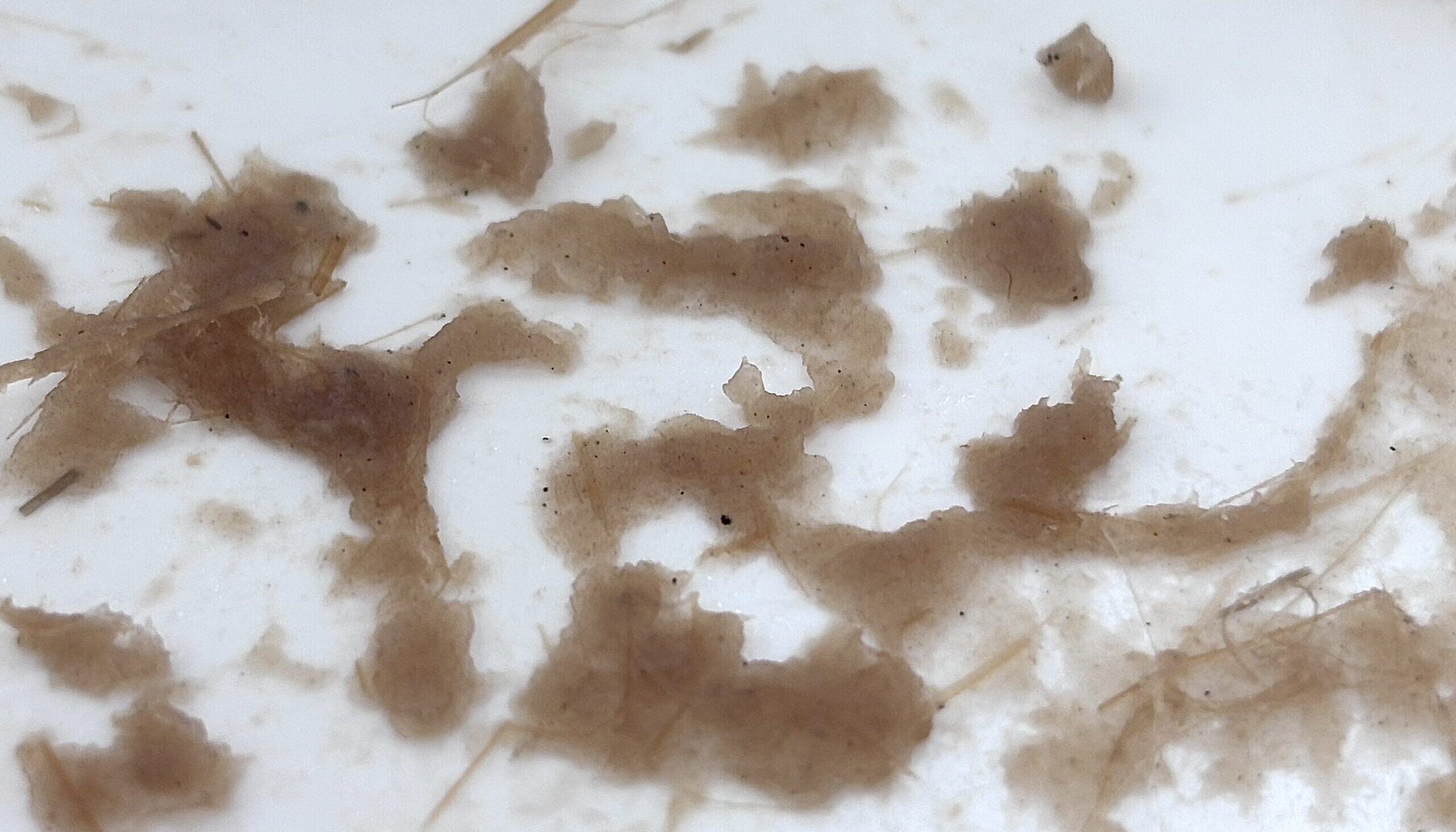
Typha capensis compared with Kōzo (paper mulberry)
Comparing Typha capensis with Kōzo, a classic papermaking fibre from the inner bark of the paper mulberry tree (Broussonetia papyrifera), helps clarify their different behaviours.
Typha capensis is a wetland plant whose fibres come mainly from leaves and stems. During shredding, half of the material becomes short fibres and fines (the other half is manually cut down to the desired lengths). The hand beating also involves shaving off more fines. These fill spaces between fibres and promote tight bonding, resulting in paper that is typically denser, opaquer, and fairly smooth—well-suited to printing or painting. Because of the high fines content, water drains slowly as the sheet forms, so the papermaker relies on time and gentle shaking to achieve an even, well-bonded surface.
Kōzo, by contrast, yields very long, strong bast fibres from the inner bark. Traditional Japanese papermaking keeps these fibres largely intact, developing just enough tiny fibrils for bonding. Kōzo papers can be thin, light, and slightly translucent, yet very strong and flexible. Their structure is dominated by long fibres, and drainage is controlled mainly by technique and the use of formation aids (such as Neri), rather than by high fines content.
In simple terms, Typha capensis illustrates how a higher content of fines can create dense, opaque, strong sheets that drain slowly but offer fine control during forming. Kōzo represents the opposite strategy: very long fibres, fewer fines, and light, strong, often more translucent sheets. Together, they show two distinct ways of using plant fibres and fines to design handmade papers with different visual and functional qualities.