
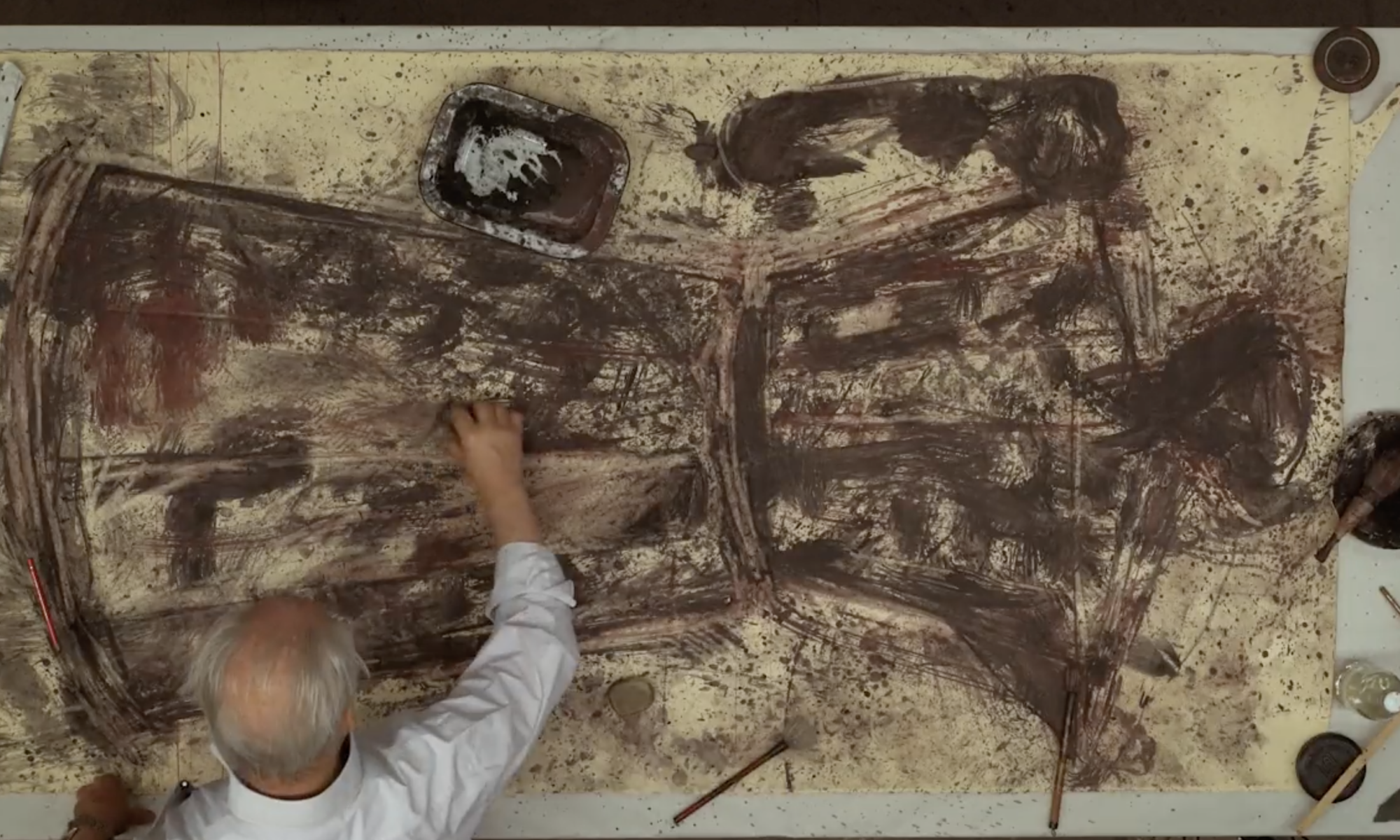
From Studio to Film to Héliogravure: spanning the work of William Kentridge in Studio Life.
Studio Life in Lockdown
Like many of us, William Kentridge was forced to reconsider his typically hectic routine when COVID-19 restrictions curtailed movement and social interaction, confining him to his Johannesburg studio. For him, this interruption became an opportunity to revisit his artistic practice and, more broadly, to reflect on the nature of the creative process.
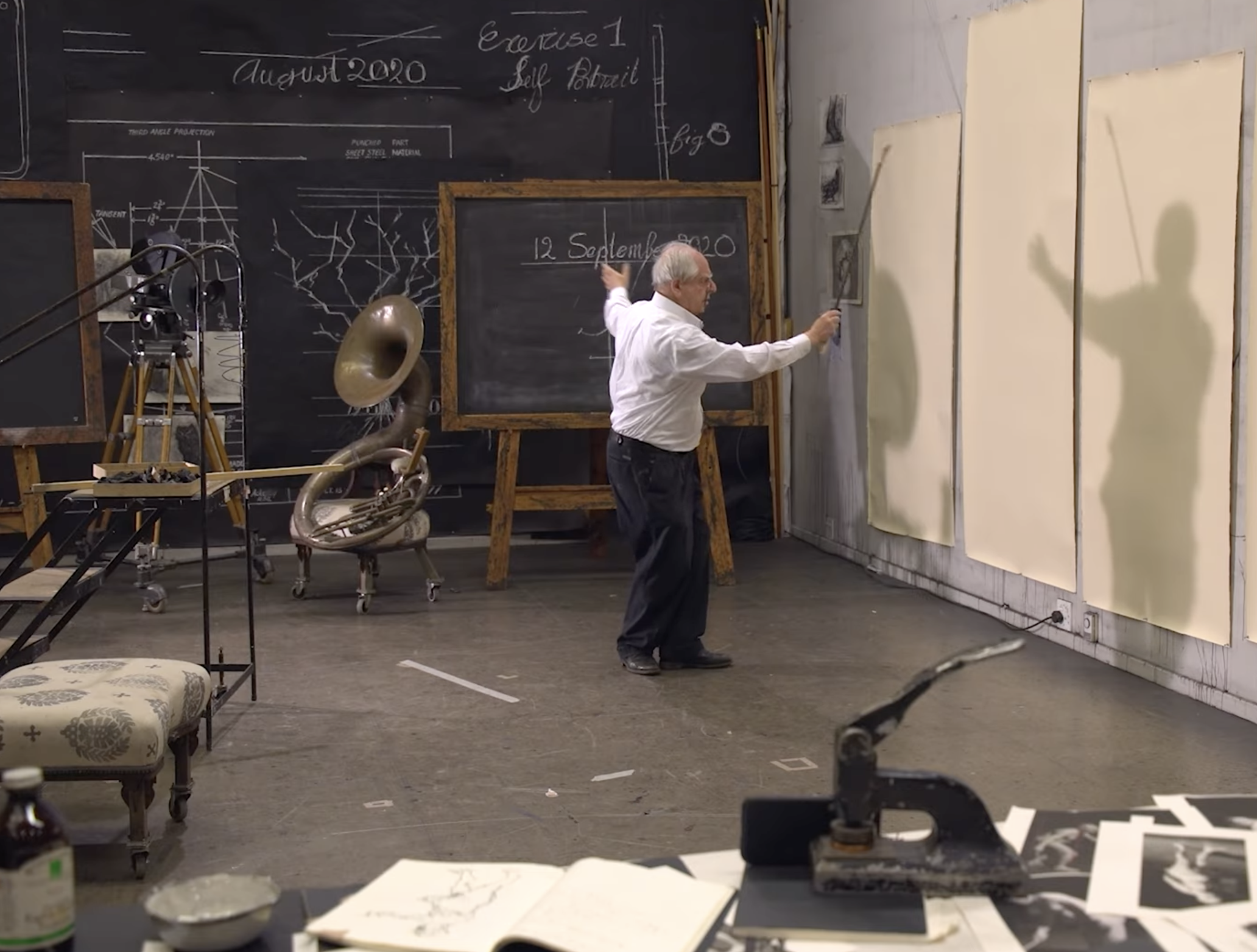
William Kentridge: Drawing, Film and Johannesburg
South African artist William Kentridge (b. 1955, Johannesburg) is celebrated for his charcoal drawings, hand-drawn animations—where erasure and re-drawing produce a palimpsest-like effect—prints, sculptures, theatre and opera. His work is profoundly connected to Johannesburg’s history, exploring themes such as mining, colonialism and the legacies of apartheid, as well as broader ideas of memory, time and uncertainty.
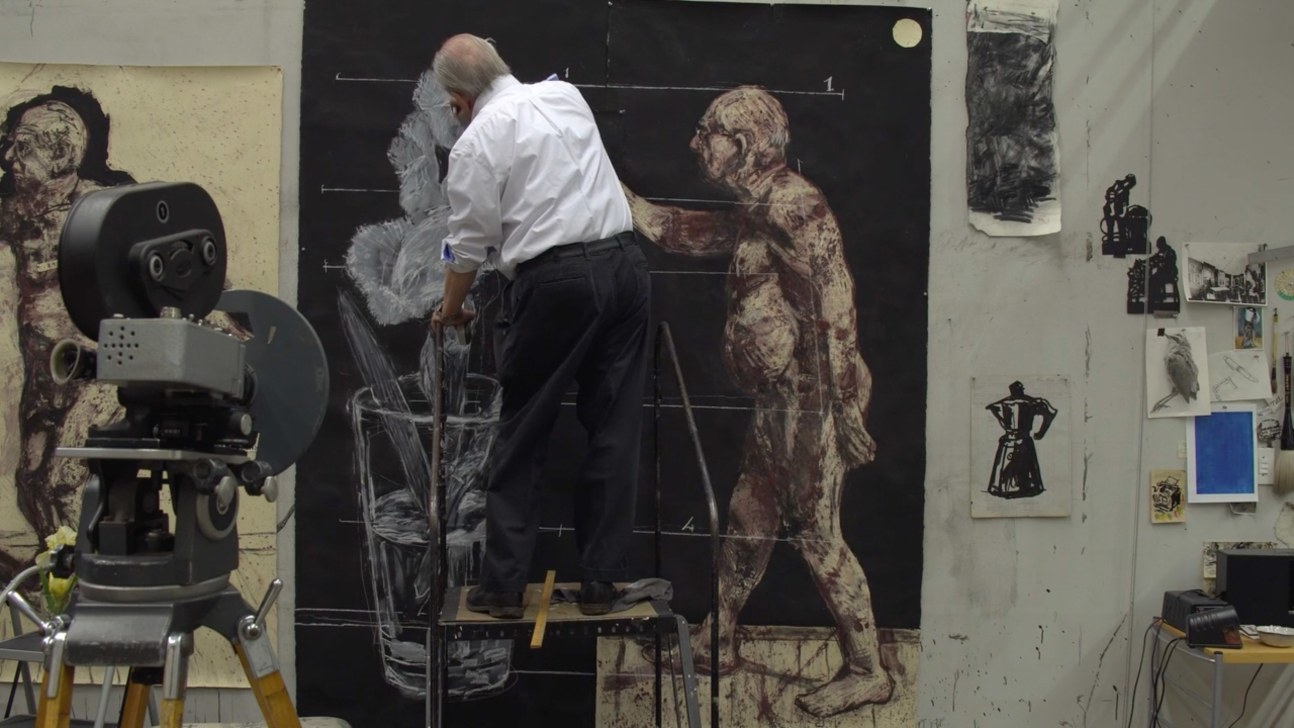
Building on his 2020 animation City Deep, Kentridge developed a suite of films under the Studio Life project, culminating in the nine-part series Self-Portrait as a Coffee-Pot (2020–2024), released on MUBI in 2024. These works offer some of the most profound and introspective insights into studio life in contemporary art. The films explore the studio as a place of creation, confinement, refuge, conflict and performance—a room in which thinking, drawing, rehearsing and remembering unfold in real time. They also interweave philosophies about the act of making art. Kentridge, in the trailer to the nine-episode film, explains “…the studio is both a physical place and a metaphorical space…”. Elsewhere, he compares the studio to “an enlarged head,” in which walking across the room to connect objects or images mimics the movement of thoughts.
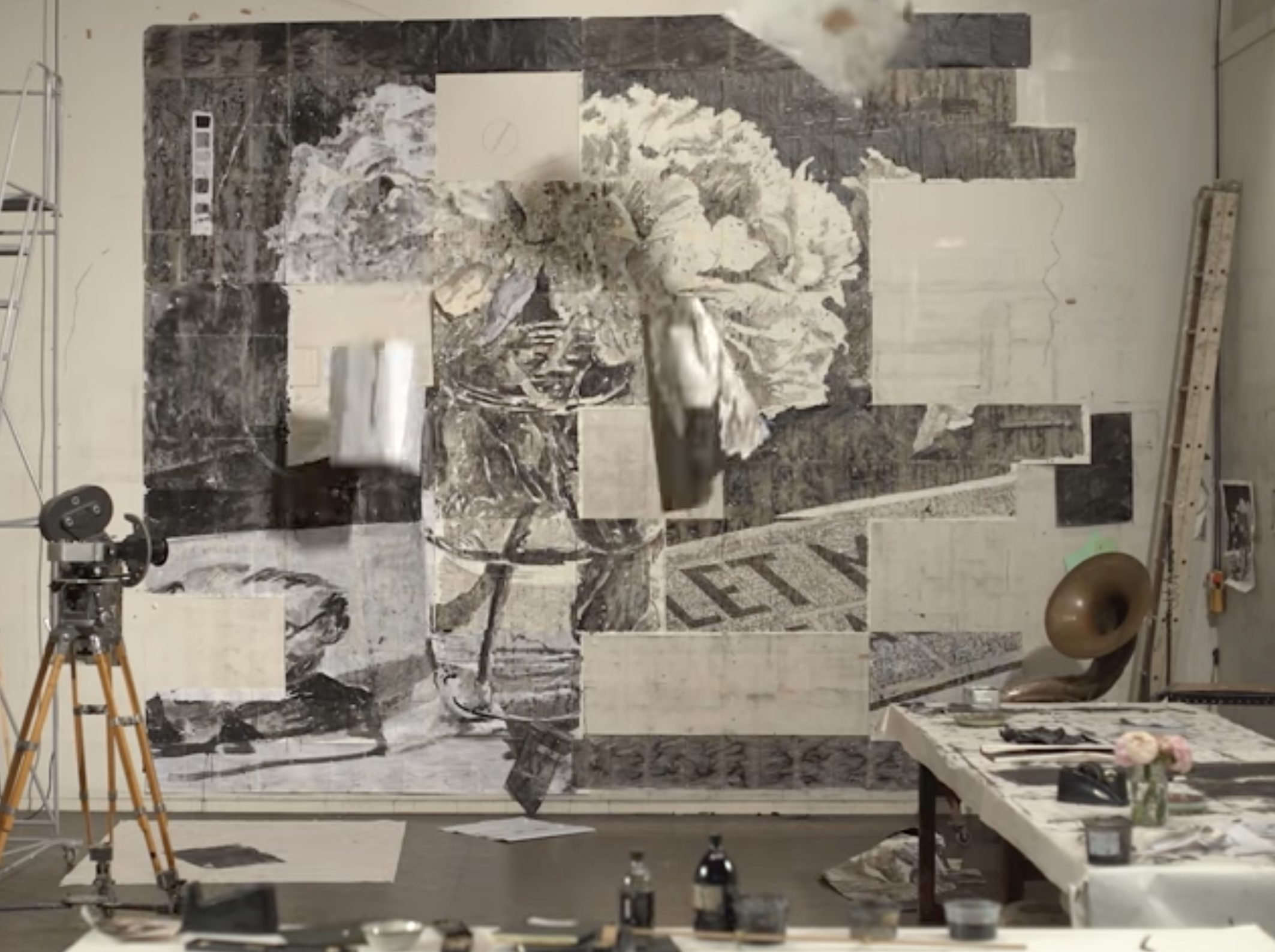
The Studio as an “Enlarged Head”
Self-Portrait as a Coffee-Pot is a significant statement late in Kentridge’s career. It is open—welcoming viewers into the artist’s thoughts and workspace—yet it maintains his characteristic reluctance to provide clear answers. The studio depicted is not an idealised artist’s loft but a genuine, lived-in space in Johannesburg that functions as a microcosm for contemplating the world and its histories.
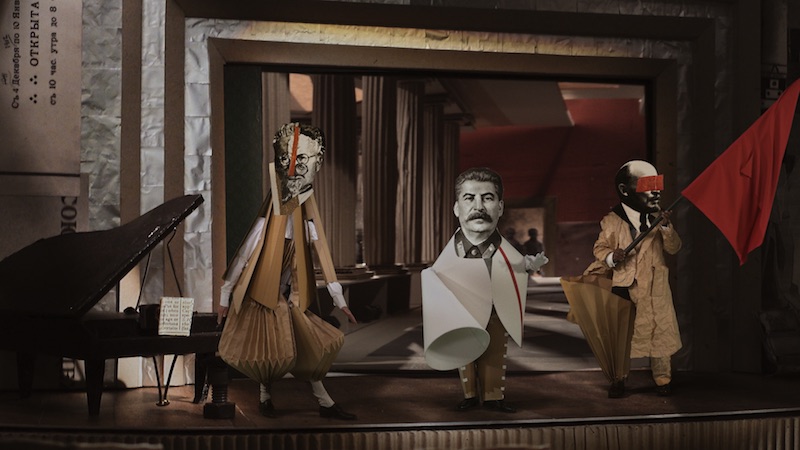
Between Animation, Performance and Philosophy
These films defy simple categorisation as polished documentaries or straightforward narratives. Instead, they combine various components: stop-motion animation of Kentridge’s charcoal drawings—filmed, erased, and redrawn, illustrating “a smudge of transformation in them,” as Kentridge explains—paired with live-action scenes showing Kentridge himself, often interacting with doppelgängers or dancing with imaginary characters. Collage, text, music (notably by long-time collaborator Philip Miller) and philosophical monologues all enter the frame. Still-life objects—cameras, papers, sculptures and the coffee pot—are treated as characters in their own right.
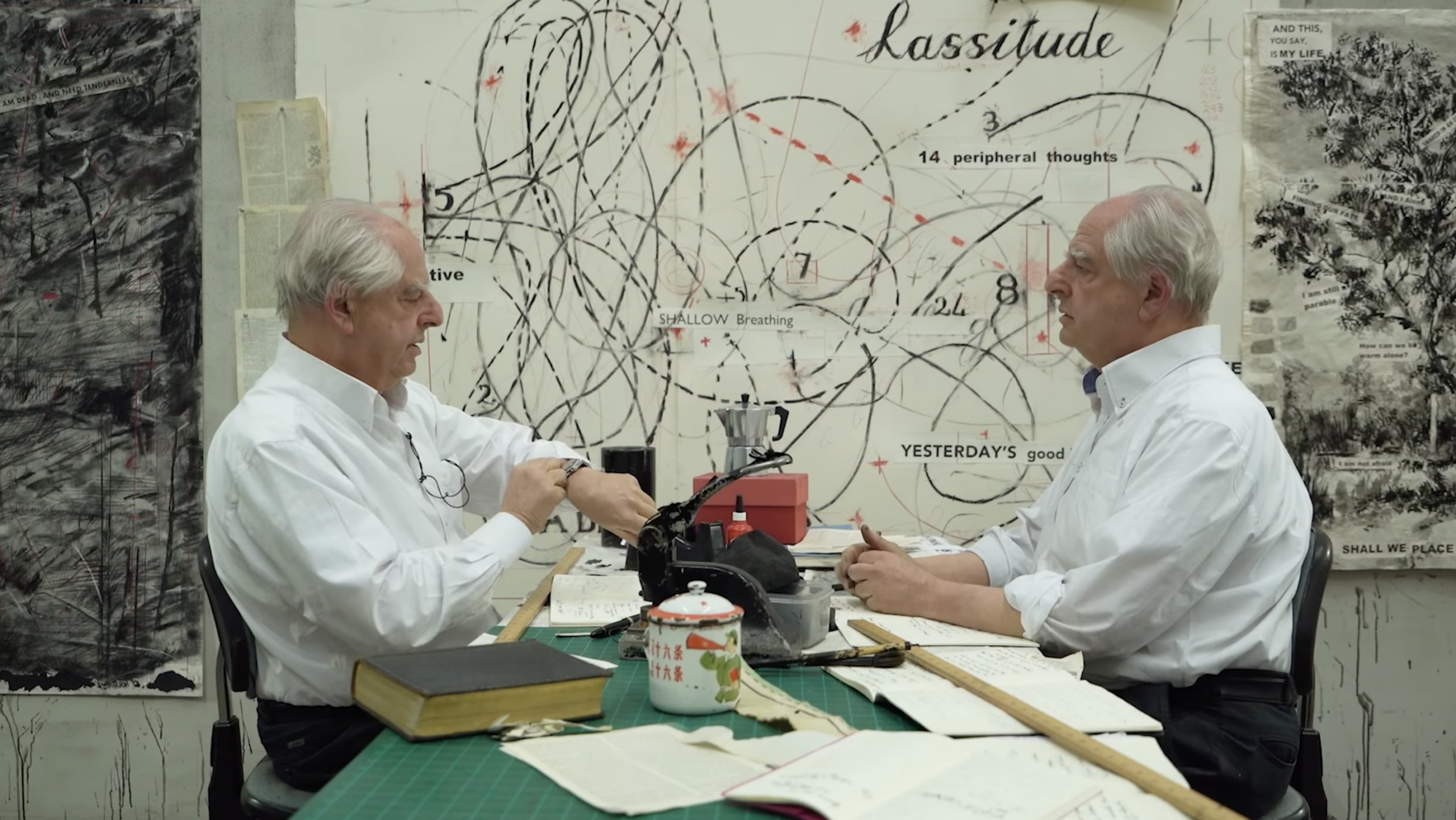
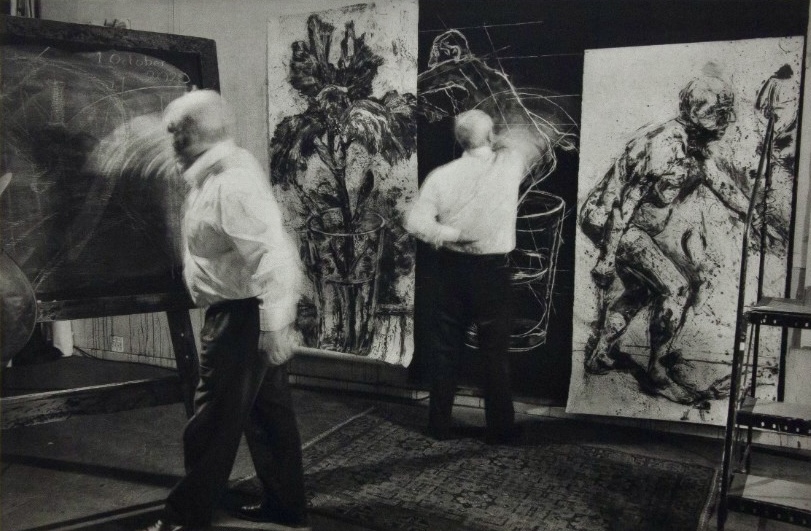
The tone moves between humour, absurdity, melancholy and serious enquiry. Episodes delve into Greek mythology, Johannesburg’s mining history, Soviet absurdism, colonialism, memory and the creative process. The physical effort involved in art-making is foregrounded: blurred motions of Kentridge at work, traces of erased drawings, pinned references and the quiet chaos of a studio in use. Internal experiences—doubt, breakthroughs, distractions and serendipity—are externalised and made visible. Kentridge stages dialogues with different versions of himself, turning the creative struggle into a form of theatre.
2020
Héliogravure
2021
Héliogravure
From Moving Image to Héliogravure
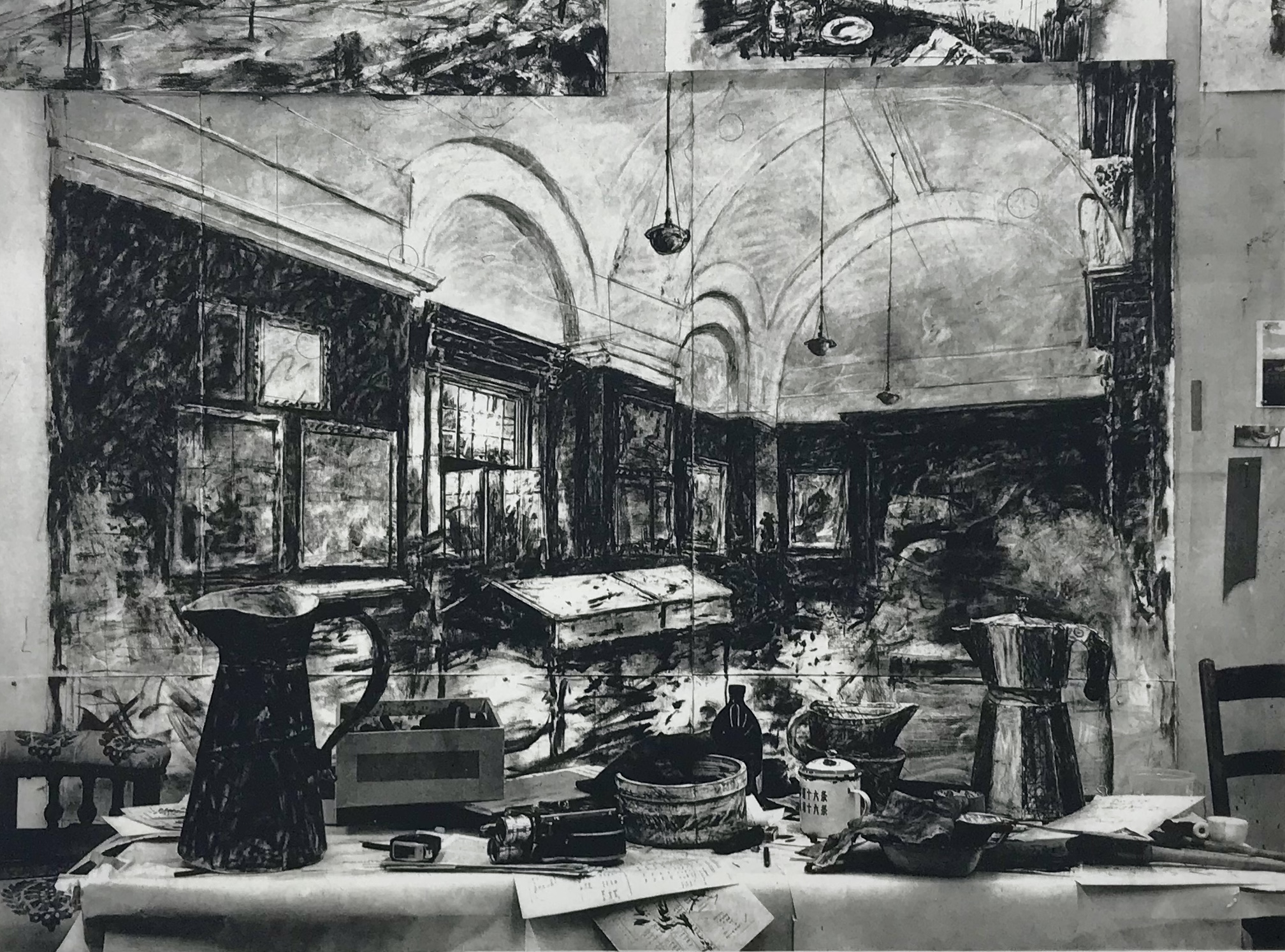
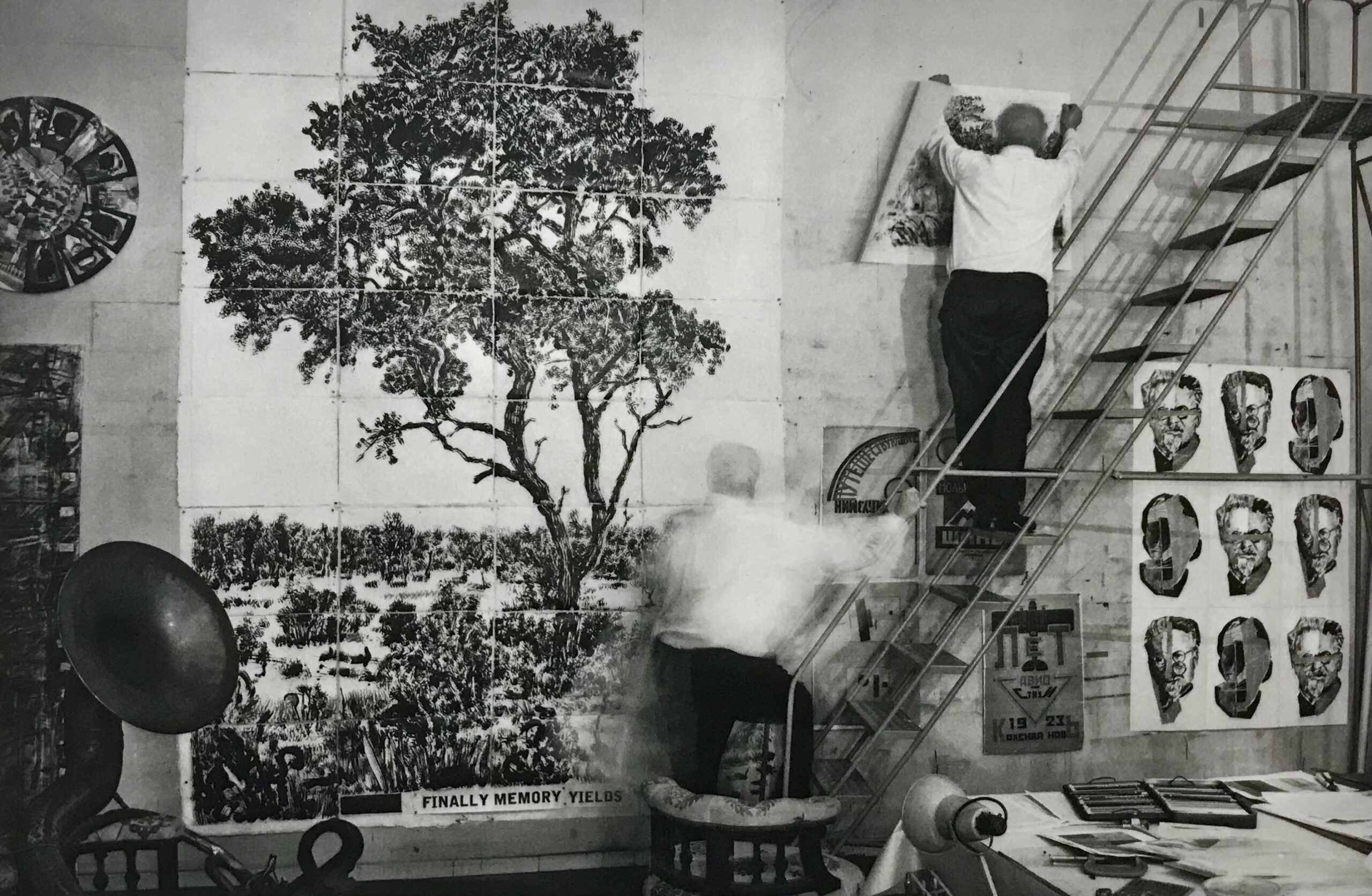
Running in parallel with these films, which offer voyeuristic glimpses into the studio, a series of héliogravures (also known as photogravure) titled Studio Life was produced. Here, the focus shifts from moving images to fixed, inked surfaces. Each plate corresponds to one of the films, yet it slightly adjusts the viewpoint. Rather than simply reproducing a still, the prints reframe the studio: they layer perspectives, revisit gestures and allow the images to echo and build on one another across the series. Where the films chase time, the héliogravures hold it in suspension.

As Kentridge’s carefully staged photographs are translated into intaglio, they begin to cast new light on the films. The prints slow down the moving images, drawing attention to small accumulations of detail: paper pinned to the wall, pages turning in a notebook, shadows on the floor, a tripod, a coffee cup. They reveal the mechanics of the work, place us alongside the artist at the table and open up parallel narratives that run beside the films rather than illustrating them.
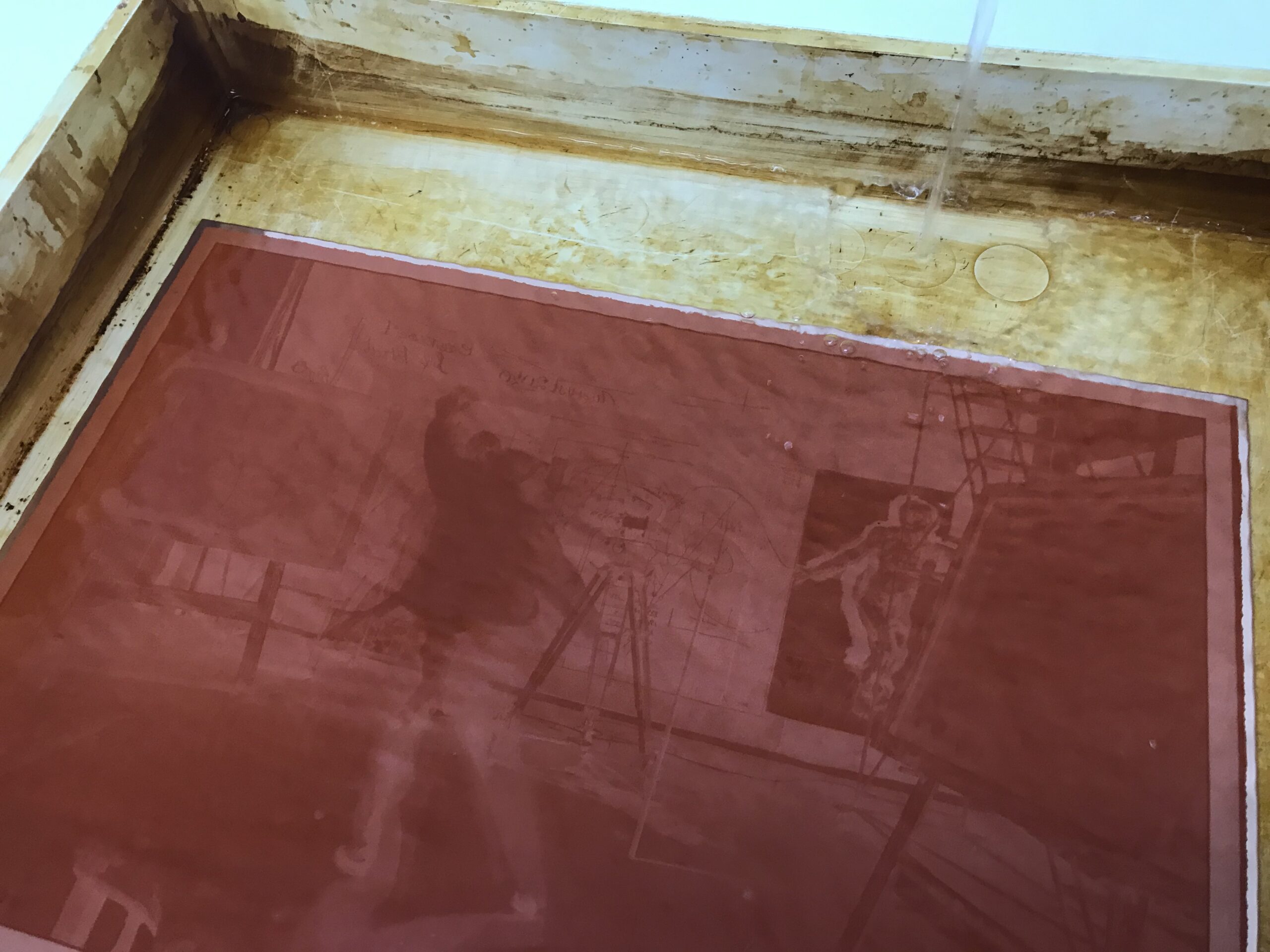
This back-and-forth between media folds Kentridge’s drawings on the wall into the objects on the table; the cameras on their stands become part of the studio’s architecture; props and tools drift in and out of focus. Throughout, the artist appears and disappears within the frame—sometimes solitary, sometimes multiplied—as if to underscore that the studio is both a physical space and a state of mind. The depth and layering that héliogravure affords resonate quietly with Kentridge’s ongoing concerns: histories of excavation and erasure, the sediment of time, and the way memory leaves its own tonal deposits.

A Dialogue Between Artist and Printer
This dual perspective reveals the making process as a dialogue between two distinct yet interdependent roles. For the artist, the studio is a site of visible thinking, uncertainty and performance—an “enlarged head” where ideas are tested, revised and staged in real time. For the printer, the process is an almost invisible, carefully calibrated translation of that thinking into pits in copper, yielding ink on paper through disciplined procedures and finely tuned judgement.

Kentridge’s films externalise the inner life of making, exposing doubt, play and improvisation. In the printer’s hands, the héliogravures internalise that turbulence into a single, concentrated surface. The work comes into being through the interplay of imaginative restlessness and meticulous technical care, with each perspective completing what the other begins.

At the core of this slow craft is the printer’s eye and judgement. Etching a héliogravure extends the moment of joy until the first proof is pulled, holding the anticipation of the image in suspension. Achieving a well-etched plate is a deliberate, sometimes painful undertaking: a sequence of acid baths and timings, measured exposures and incremental adjustments that must all align. What was once considered a purely reproductive technique now feels more like a series of procedures—carried out in stages, monitored and adjusted with care—where each step leaves an invisible trace on the final image.
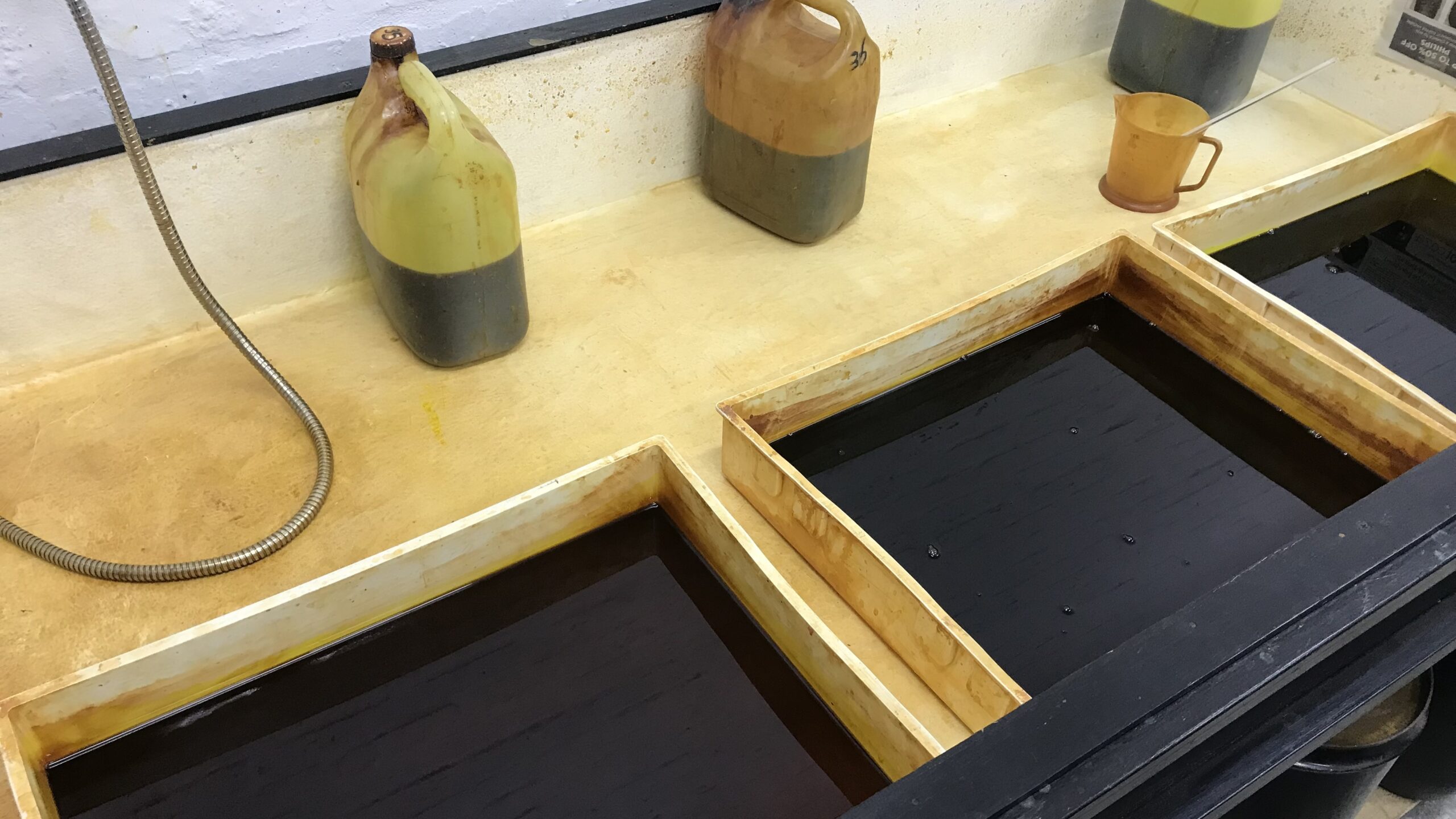
The print studio—with its systems, stations and repetitive print rituals—anchors this process, holding the shared aim of artist and printer: to produce a héliogravure faithful to the original vision while allowing something new to emerge in ink. For the printer, entrusted with the artist’s precise intention, the work demands the calm focus of surgery. Nothing is rushed, nothing is left to chance, and every decision carries consequences for the print’s tonal balance and emotional temperature. Each adjustment—a slightly longer etch, a fraction more ink, a different pressure at the press—can shift the image towards clarity or obscurity, towards delicacy or density. The responsibility is not only technical but emotional: a quiet matter of life or death for the image, in which success is measured less in spectacle than in the subtle rightness of light, shadow and atmosphere.

The printer’s inner dialogue often proceeds like this: “I work in isolation (with Janet, always Janet) on these plates, never engaging with the artist. How does one know what the artist wants? I know one thing: if the plate is beautifully made, rendering the full range of continuous tones, showing the details in the highlights and the nuanced, hidden details in the shadows, without burning out the light tones or pushing the shadows into the darks, then he would be happy.
Why? Because I feel our sensibilities align. He had also accepted the previous plates. This conformity meant I should keep doing what I’m doing. Surely, he would say something if he wasn’t satisfied.”
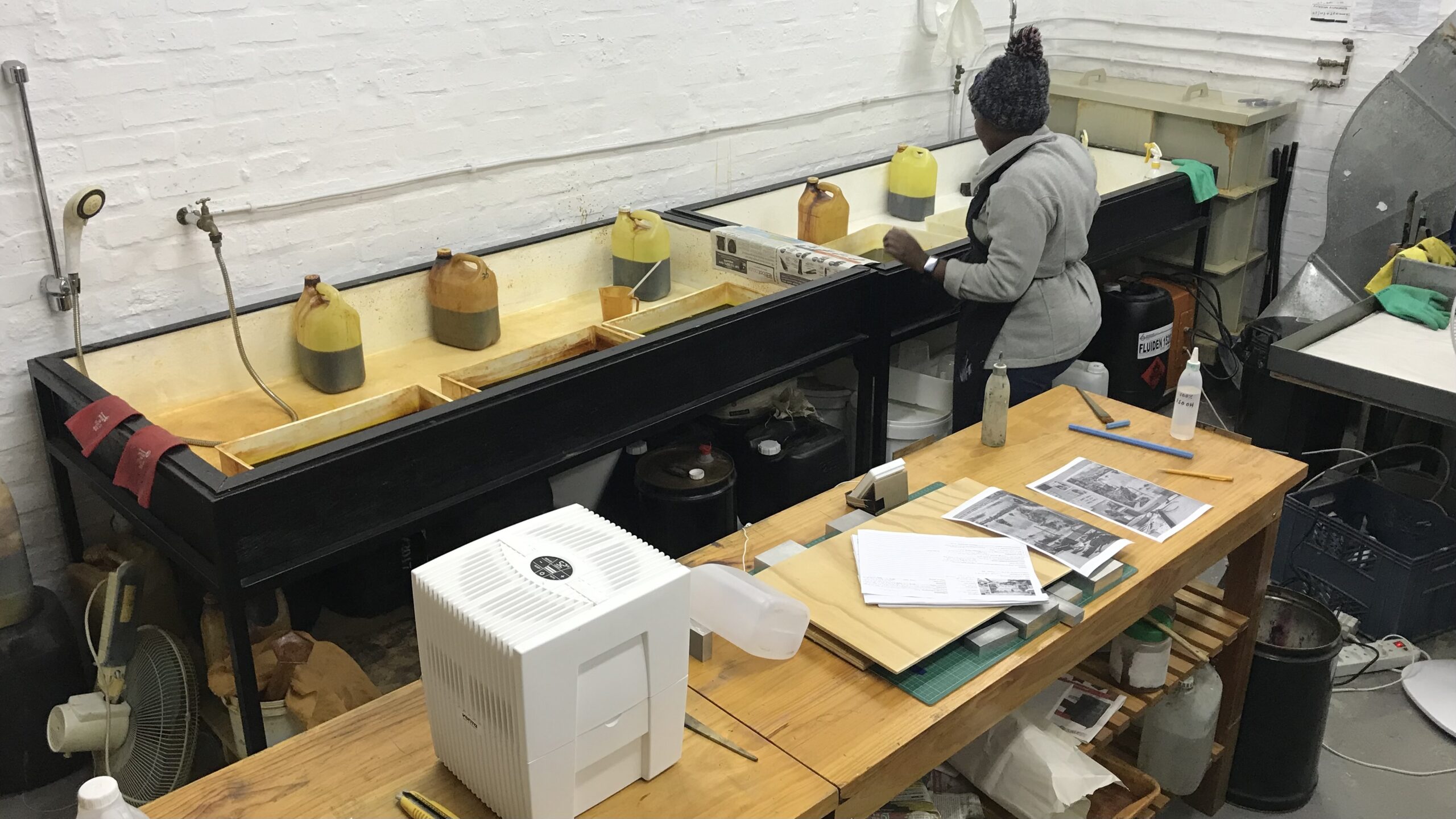
While the printer is working under the mantle of “is it good enough”, the work is accompanied, protected and guided towards a positive outcome for the artist, the plate moving from table to bath to press in a carefully choreographed circuit. In this sense, the printer stands as an extension of the artist’s studio—a refined instrument used to realise the image—and the héliogravure plate becomes the point at which intention, craft and time are held together in a single, resonant surface.

Warren Editions and the Studio Life Héliogravures
At Warren Editions, intaglio is at the core of the studio’s printmaking, and héliogravure is approached not merely as a technique but as a demanding craft. In the context of the Studio Life project, this discipline becomes the bridge between Kentridge’s imagery and the final printed form.

The series comprises twelve héliogravures, published by David Krut Projects, with project management by Jillian Ross Print. Master printer Zhané Warren etched all twelve copperplates, and Kim-Lee Loggenberg printed the editions from David Krut Workshop. Each plate reflects an extended sequence of decisions—from how light and shadow are weighted to how much of the camera, backdrop or studio furniture is allowed to remain in view. Technical mastery underpins the work, but the emphasis falls on how these choices shape the emotional and atmospheric register of each image.
2022
Héliogravure
Héliogravure, an intaglio and photomechanical process, is prized for its ability to hold both photographic detail and the depth of richly pigmented inks. On the page, this translates into a wide, tactile spectrum of greys and blacks—from the faintest haze of light to deep, velvety shadows. In the Studio Life impressions, that tonal richness becomes a way to register time: the residue of movement, corrections and revisions in the studio.
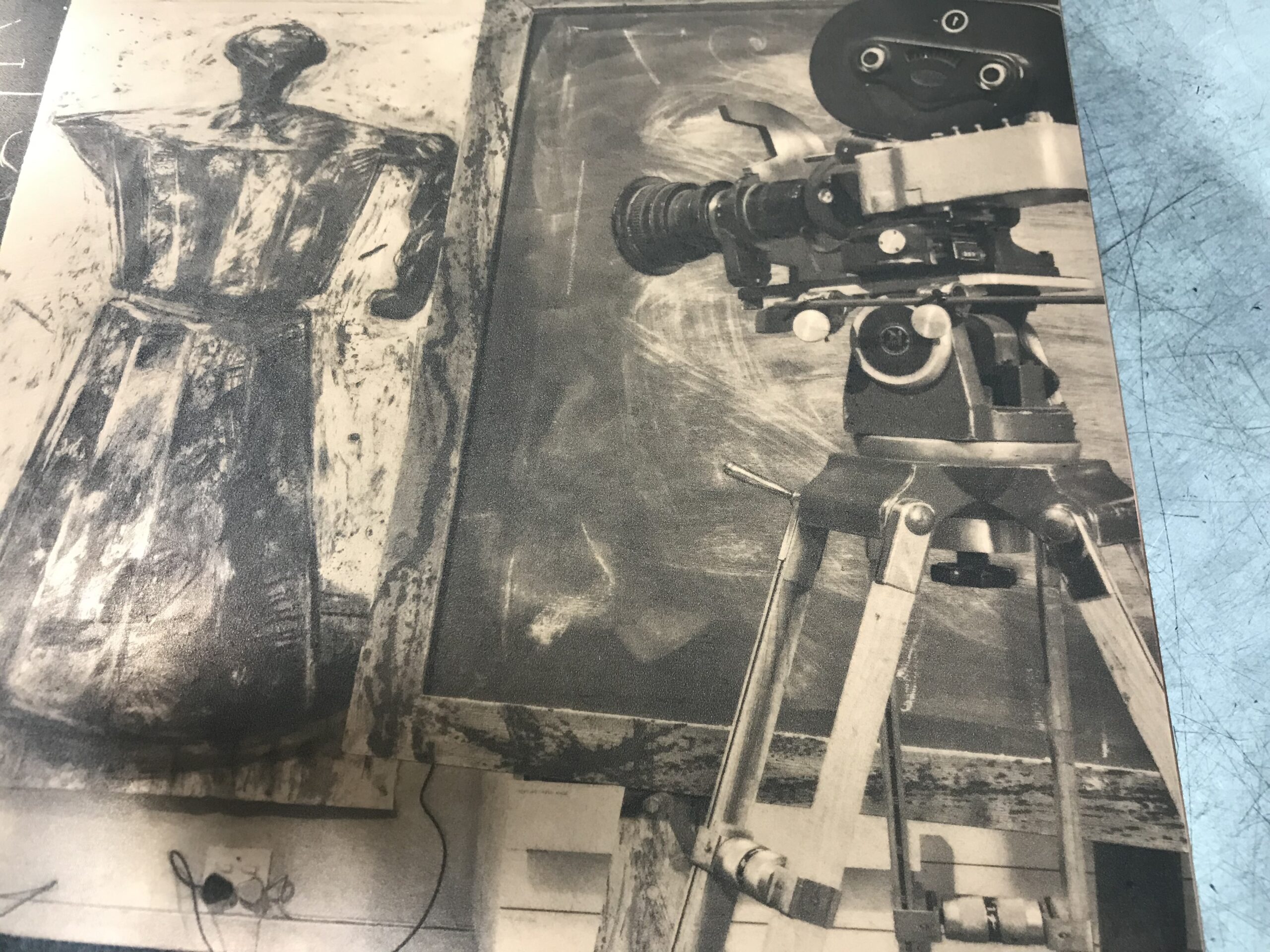
The plates developed by Zhané Warren are grounded in a precise, carefully calibrated working method, yet what ultimately reaches the viewer is the studio’s own atmosphere. The controlled environment, the slow progression from light to dark and the countless small judgements made during etching are held quietly inside each impression rather than declared on the surface.
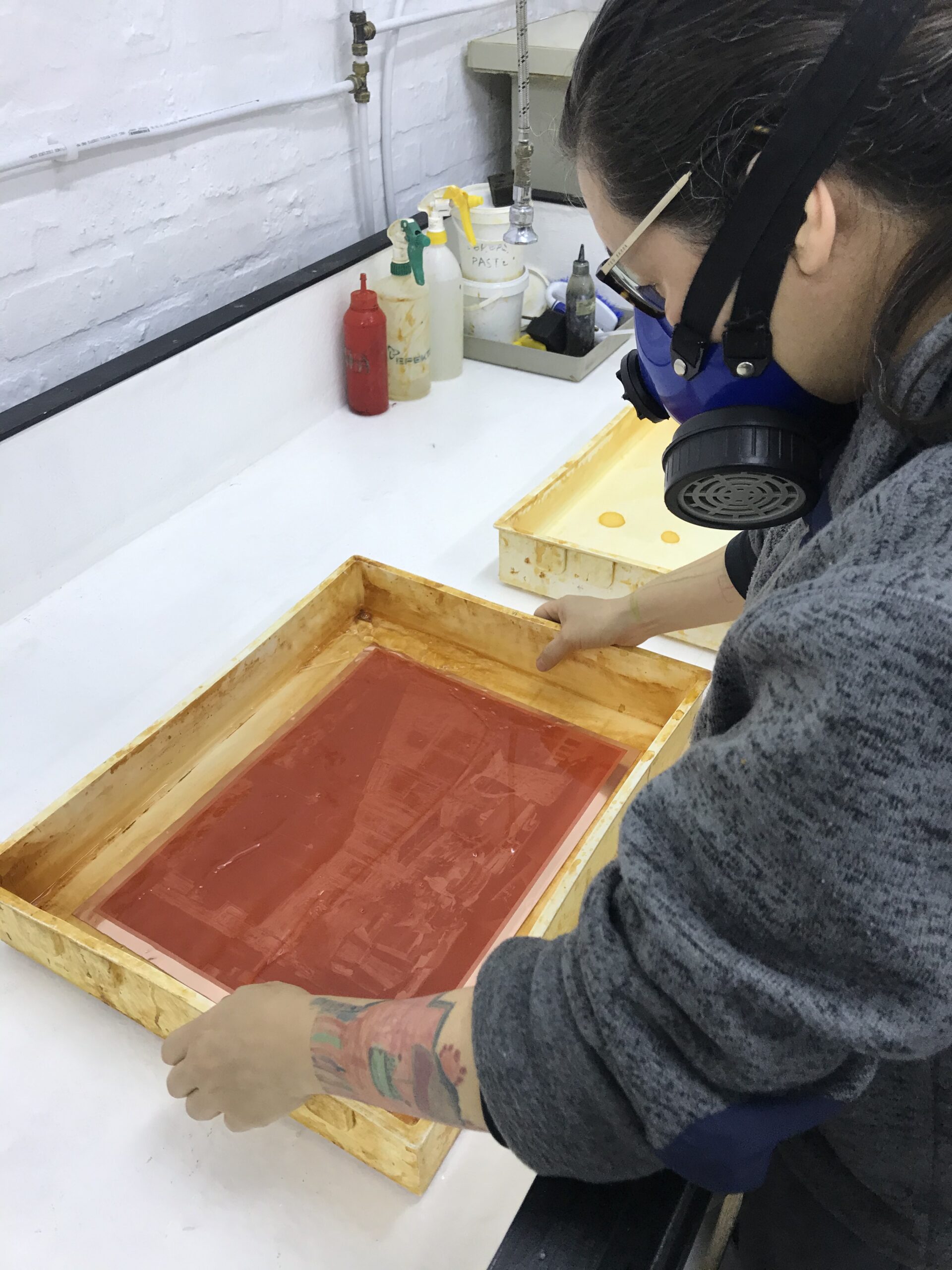
The resulting Studio Life héliogravures do more than record images of an artist at work. They gather the tempo of Kentridge’s studio—its pauses and improvisations, its clutter and its order—into a sequence of still, concentrated frames. In Zhané Warren’s hands, héliogravure becomes a medium of unusual depth and subtlety, one that sustains the intimacy of Kentridge’s films while giving them a new, enduring physical presence on paper. In these prints, the restless movement of the studio settles into a lasting, tactile image that holds both the turbulence of making and the calm of its resolution.